Qingdao Rinborn Machinery Co., Ltd.
+86 186 6184 7678

Forging is a metal forming method that uses forging machinery to apply pressure to a metal billet, causing plastic deformation to obtain forgings with specific mechanical properties, shapes, and dimensions. Forging eliminates defects such as casting porosity that occur during the smelting process, optimizes the microstructure, and preserves intact metal flow lines. Forgings generally have superior mechanical properties compared to castings of the same material.
Based on the workpiece temperature during forging, forging can be classified as: hot forging (above the recrystallization temperature), warm forging (from the recrystallization temperature to 30% of the recrystallization temperature), and cold forging (below 30% of the recrystallization temperature, generally at room temperature).

Precision Forgings

Alloy Steel Forging

Alloy Steel Gears by Forging

Forging Gears
The most commonly used material in forging is alloy steel. The initial recrystallization temperature of steel is approximately 727℃, but 800℃ is generally used as the dividing line. Forging above 800℃ is hot forging; forging between 300 and 800℃ is called warm forging or semi-hot forging; and forging at room temperature is called cold forging. Forgings used in most industries are hot forgings. Warm forging and cold forging are mainly used for forging parts in automobiles and general machinery. Warm forging and cold forging can effectively save materials.
Free Forging
Free forging refers to a processing method that uses simple, general-purpose tools, or directly applies external force to the billet between the upper and lower anvils of forging equipment, causing the billet to deform and obtain the desired geometric shape and internal quality. Forgings produced using the free forging method are called free forgings. Free forging is mainly used for producing forgings in small batches. Forging equipment such as forging hammers and hydraulic presses is used to shape the billet and obtain qualified forgings. The basic processes of free forging include upsetting, drawing, punching, cutting, bending, twisting, shifting, and forging joining. Free forging always uses hot forging methods.
Die Forging
Die forging is further divided into open die forging and closed die forging. The metal billet is deformed under pressure within a forging die cavity of a certain shape to obtain the forging. Die forging is generally used for producing parts that are not heavy but produced in large batches. Die forging can be divided into hot die forging, warm forging, and cold forging. Closed die forging, due to the absence of flash, has a higher material utilization rate. Complex forgings can be finished in one or several processes. Furthermore, closed die forging produces forgings with a smaller stress area, requiring less load. It is important to note that closed die forging requires strict control of the billet volume, the relative position of the forging dies, and measurement of the forgings to minimize die wear.
Suitable Metal Materials for Forging
The main materials used for forging are carbon steel and alloy steel of various compositions, followed by aluminum, magnesium, copper, titanium, and their alloys. The original states of the materials include bars, ingots, metal powder, and liquid metal. The ratio of the cross-sectional area of the metal before deformation to the cross-sectional area after deformation is called the forging ratio. Correctly selecting the forging ratio, appropriate heating temperature and holding time, appropriate initial and final forging temperatures, and appropriate deformation amount and speed are crucial for improving product quality and reducing costs. Besides the aforementioned metallic materials, wrought iron-based, nickel-based, and cobalt-based superalloys are also forged or rolled. However, due to their relatively narrow plastic range, these alloys are more difficult to forge, and strict requirements are placed on the heating temperature, initial forging temperature, and final forging temperature for different materials.

Alloy Steel Gears
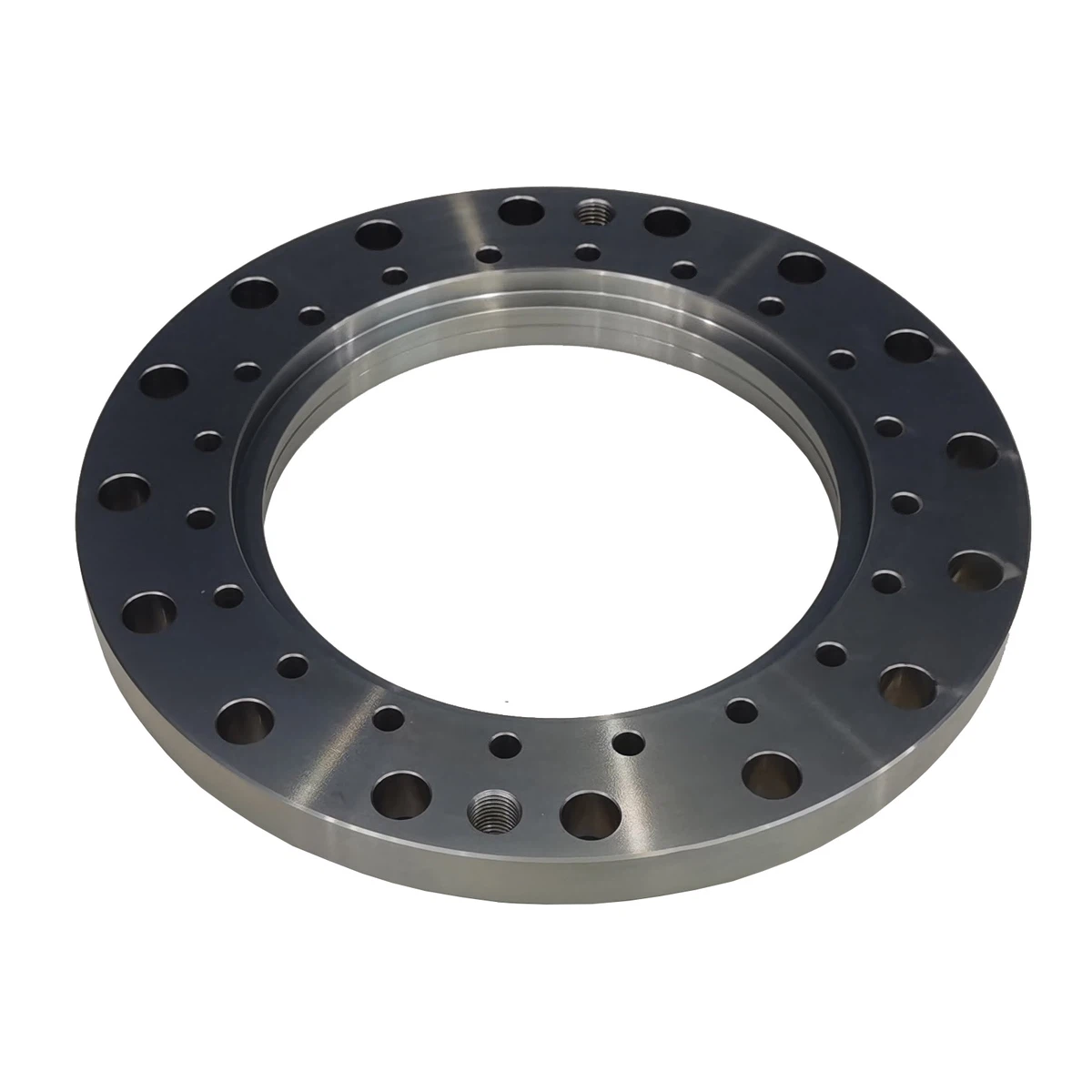
Forged Flange

Forged Steel Gear

Gear by Forging
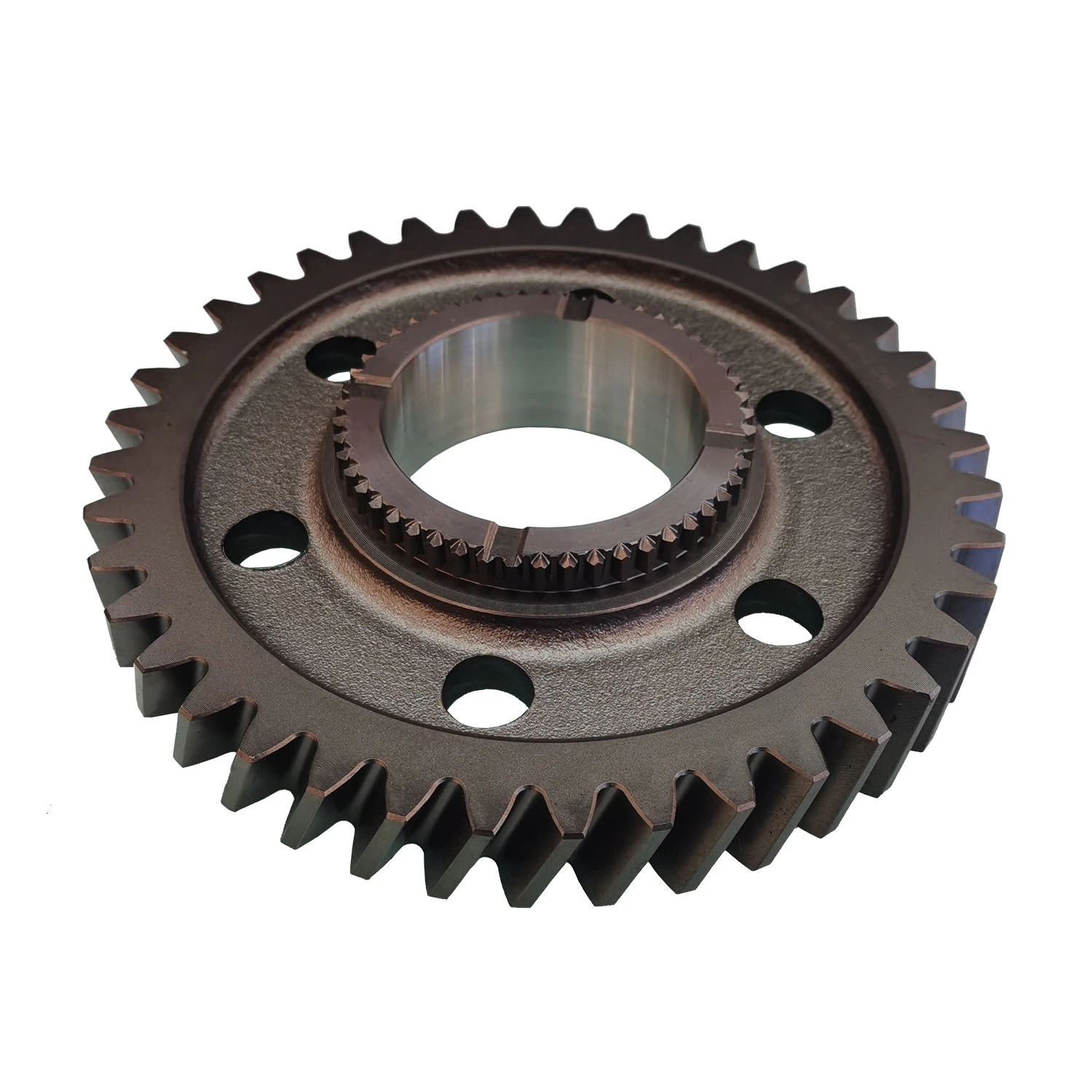
Gears by Forging and Machining

Precision Forging Gears

Ring Gear by Forging and Machining

Steel Gear
Forging Process Flow
Different forging methods have different processes, with hot die forging having the longest flow. The general sequence is: billet blanking, billet heating, roll forging preparation, die forging, trimming, cleaning, punching, straightening, etc.
Forging Inspection
Forging inspection includes in-process inspection, dimensional inspection, surface defect detection, and chemical composition, residual stress, mechanical properties, and metallographic analysis. If necessary, non-destructive testing (NDT) may also be performed. Heat treatment of forgings is used to eliminate forging stress and improve the metal's machinability.
Characteristics of Forgings
1. Compared to castings, forging improves the microstructure and mechanical properties of metals. After hot working deformation via forging, the original coarse dendrites and columnar grains in the cast metal are transformed into finer, more uniform equiaxed recrystallized grains due to deformation and recrystallization. This compacts and welds inconsistencies such as segregation, porosity, pores, and inclusions within the ingot, resulting in a denser microstructure and improved plasticity and mechanical properties.
2. The mechanical properties of castings are lower than those of forgings made of the same material. Furthermore, forging ensures the continuity of the metal's fibrous structure, maintaining consistency between the fibrous structure and the shape of the forging, resulting in complete metal flow lines and guaranteeing good mechanical properties and a longer service life. Forgings produced using precision die forging, cold extrusion, and warm extrusion processes are unmatched by castings.
3. Forgings are objects in which metal is subjected to pressure and plastically deformed to achieve the desired shape or appropriate compressive force. This force is achieved using a hammer or pressure. The forging process creates a refined granular structure and improves the physical properties of the metal. In practical applications of components, a proper design ensures that particle flow is aligned with the main pressure direction. In contrast, castings are metal parts formed using various casting methods. This involves pouring molten metal into a pre-prepared mold using methods such as pouring, injection, suction, or other casting techniques. After cooling, the metal undergoes sand removal, cleaning, and post-processing to obtain an object with a specific shape, size, and performance.
4. Forgings can achieve net-shape forging. Forgings require minimal or no machining and offer advantages such as precise shape, high dimensional accuracy, high form and position accuracy, and high surface roughness.
Applications of Forgings
Important parts in related machinery that bear high loads and operate under harsh conditions are often forged, except for simpler shapes that can be made from rolled plates, profiles, castings, and welded parts. Forging is one of the main processing methods for providing blanks for mechanical parts in the machinery manufacturing industry. Through forging, not only can the shape of mechanical parts be obtained, but the internal structure of the metal can also be improved, enhancing its mechanical and physical properties. For most important mechanical parts that are subjected to high stress and have high requirements, forging is the most common manufacturing method. For example, important parts such as turbine generator shafts, rotors, impellers, blades, retaining rings, large hydraulic press columns, high-pressure cylinders, rolling mill rolls, internal combustion engine crankshafts, connecting rods, gears, bearings, and artillery in the defense industry are all produced by forging.
