Qingdao Rinborn Machinery Co., Ltd.
+86 186 6184 7678


RMC Foundry is a China-based manufacturer specializing in precision metal casting and CNC machining for global OEM industries. Our capabilities include sand casting, investment casting, shell mold casting, lost foam casting, vacuum casting, machining, heat treatment, and surface finishing. We produce ferrous and non-ferrous metal parts used in industrial equipment, automotive, pumps, valves, agriculture, construction machinery, and energy applications.
Advanced Manufacturing Capabilities
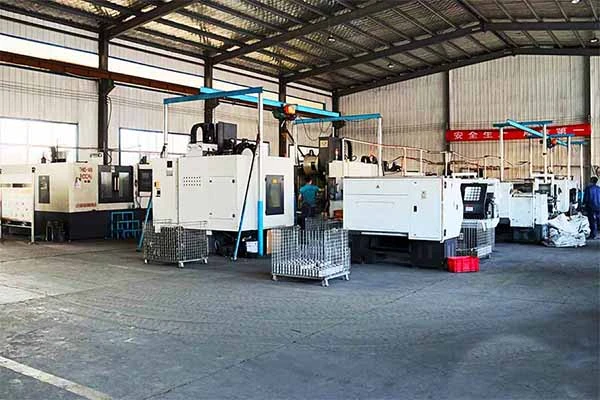
RMC operates integrated casting and machining workshops with modern production equipment and engineering software. This allows us to manufacture complex and high-precision metal parts with stable quality.
Strict Quality Control
Quality inspection is applied from raw materials to final machining. Chemical analysis, dimensional inspection, and process audits help ensure every batch meets customer specifications and traceability requirements.
Flexible OEM Manufacturing
We support custom production based on drawings, samples, or technical requirements. Our engineering team works closely with customers to improve manufacturability and reduce production costs.
One-Stop Production Service
From tooling and casting to machining, heat treatment, surface treatment, and logistics, RMC provides complete manufacturing support to simplify supply chain management for overseas buyers.


|
Item |
Specification |
|
Max Size |
1,000 mm × 800 mm × 500 mm |
|
Weight Range |
0.5 kg – 100 kg |
|
Annual Capacity |
2,000 Tons |
|
Tolerances |
Available on Request |
High Accuracy and Fine Details
You see, when you need precision, vacuum casting should be your go-to. It’s known for great accuracy and sharp details. I’ve seen parts come out looking pretty much identical to the original model—almost like magic.
Cost-Effective for Low-Volume Production
But the beauty of vacuum casting doesn’t stop there. It’s cost-effective. Seriously, if you’re only making a small batch, this is the way to go. Traditional methods like injection molding might be great for big runs, but you’re looking at some overwhelming upfront costs.
Versatile Material Options
Now, here’s another great thing: material options. During the vacuum casting process, you’re not stuck with just one type of material. Whether you need ABS-like plastics or clear resins, there’s a material for pretty much anything. It’s super versatile.
Superior Surface Finishes
Now, don’t even get me started on the surface finishes. If you think smooth, think again. With vacuum casting, your parts come out with a great finish, and if you want it to be even better, that’s where the surface finishing services come in.

Automotive Industry
For the production of customized components, functional prototypes and parts for pilot cars.

Medical Devices
To make prototypes of complex devices and components.

Consumer Electronics
For design prototypes and finished parts.

Industrial products
For fit, form and function testing in development
|
ABS-like |
Good impact resistance Well-balanced physical properties |
|
PA-like |
Durable and rigid Lightweight |
|
PC-like |
Good transparency Good UV resistance |
|
PP-like |
High impact resistance Good flexibility |
|
PMMA-like |
Good transparency Good UV resistance |
|
Soft-rubber-like |
Flexible Good shock absorption |
Die casting machine
A high-pressure machine with fast shot control and precise gate velocity.
01
Vacuum system
Vacuum pumps, control valves, reservoirs/accumulators, and sensors capable of achieving the target vacuum level quickly and holding it through fill.
02
Sealed dies
Robust parting-line seals, O-rings/gaskets around ejector pins and slides, and vacuum blocks that direct evacuation flow.
03
Venting and gating
Vacuum channe is positioned to evacuate air from the last-to-fill regions. Gates wii be sized and oriented to promote laminar flow and avoid premature freezing at thin sections.
04
Instrumentation
Pressure transducers (cavity vacuum), thermocouples (melt and die), and shot sleeve and plunger position/velocity sensors.
05
|
Material Grade |
Aluminum Alloy, Zinc Alloy, Magnesium Alloy |
|
Part Size |
Up to 600 mm (typical vacuum system limit) |
|
Part Weight |
0.1 kg – 20 kg |
|
Surface Finish |
Smooth Finish, Polishing, Anodizing, Painting |
|
Tolerance Level |
±0.05 mm – ±0.2 mm (depends on design) |
|
Wall Thickness |
1.0 mm – 10 mm |
|
Packaging |
Bubble + Carton + Wooden Case |
|
Shipping |
We have long-term partnerships with DHL, UPS, FedEx, TNT, and EMS, and can arrange air or sea freight for large orders. |
RMC was founded in 1999 by our founding team based in Qingdao, Shangdong, China. With its foundry and machining workshop also in Shandong province, we have now grown to become one of the finest metal forming companies with processes of sand casting, lost wax casting (investment casting), shell mold casting, lost foam casting, vacuum casting, precision forging, machining and post-processes such as surface treatment and heat treatment.



(0/10)

