Qingdao Rinborn Machinery Co., Ltd.
+86 186 6184 7678


RMC Foundry is a China-based manufacturer specializing in precision metal casting and CNC machining for global OEM industries. Our capabilities include sand casting, investment casting, shell mold casting, lost foam casting, vacuum casting, machining, heat treatment, and surface finishing. We produce ferrous and non-ferrous metal parts used in industrial equipment, automotive, pumps, valves, agriculture, construction machinery, and energy applications.
Advanced Manufacturing Capabilities
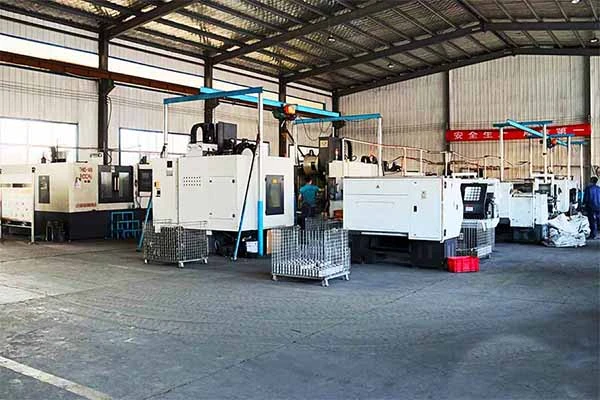
RMC operates integrated casting and machining workshops with modern production equipment and engineering software. This allows us to manufacture complex and high-precision metal parts with stable quality.
Strict Quality Control
Quality inspection is applied from raw materials to final machining. Chemical analysis, dimensional inspection, and process audits help ensure every batch meets customer specifications and traceability requirements.
Flexible OEM Manufacturing
We support custom production based on drawings, samples, or technical requirements. Our engineering team works closely with customers to improve manufacturability and reduce production costs.
One-Stop Production Service
From tooling and casting to machining, heat treatment, surface treatment, and logistics, RMC provides complete manufacturing support to simplify supply chain management for overseas buyers.


|
Item |
Specification |
|
Max Size |
1,500 mm × 800 mm × 500 mm |
|
Weight Range |
0.1 kg – 500 kg |
|
Annual Capacity |
10,000 Tons |
|
Accuracy |
As per standards or on request (Min. ±0.003 mm) |
|
Hole Tolerance |
Up to ±0.002 mm diameter |
|
Geometric Tolerance |
Flatness, Roundness, Straightness as per standards or custom requirement |
Types of CNC Machined Parts
The CNC machined parts produced by our company mainly include the following types:
Stainless Steel CNC Precision Machining Flange
Stainless steel CNC precision machining flange is a corrosion-resistant pipe connector manufactured to high-tolerance, custom specifications using Computer Numerical Control (CNC) technologies.
Stainless Steel Precision CNC Machining Camlock
Stainless Steel Precision CNC Machining Camlocks are high-strength, corrosion-resistant quick-connect fittings manufactured via CNC machining or precision casting (mostly 316 stainless steel).
Stainless Steel Machined Flange
Stainless steel machined flange is a corrosion-resistant, high-strength fitting used to connect pipes, valves, or pumps in piping systems.
Less Room For Human Error
CNC machining is a skilled business and requires training, experience, and intuition on the part of design engineers and machine operators. Nevertheless, the process involves far less manual involvement than previous machining techniques before the introduction of CNC – and with this comes less room for human error.
Reduced Waste
CNC-produced parts can be produced to tighter tolerances, using less raw materials, than their hand-machined counterparts. This reduces the waste material associated with each part, with cost savings that can quickly add up over large production runs.
Greater Efficiency
Due to its high level of automation, CNC machining can produce a larger number of complex components and parts, in a shorter amount of time, than manual machining.
Lower Labour And Energy Costs
Because CNC machining involves less human input, the process is less intensive in the number of person-hours it takes to produce each part. The latest generation of CNC equipment is also highly energy efficient, capable of operating at a fraction of the cost of older models.
Complex And Innovative Parts
CNC machines are exceptionally versatile in the range of parts and products they can produce, allowing design engineers to innovate with complex and non-standard solutions to engineering problems.
Aerospace Industry
The aerospace industry uses CNC machined components for structural parts, brackets, engine-related components, fittings, housings, and lightweight precision parts.
Automotive Industry
The automotive industry uses CNC machined components for engine parts, transmission components, suspension parts, prototypes, housings, connectors, and testing fixtures.
Electronics Industry
In electronics, CNC machined components are used for enclosures, heat sinks, connectors, frames, precision housings, and internal support parts.
Medical Device Industry
Medical device manufacturers use CNC machined components for surgical instruments, diagnostic equipment, dental parts, implant-related components, and precision housings.
Industrial Equipment
Industrial equipment uses CNC machined components for shafts, plates, fixtures, machine frames, gears, valves, fittings, and motion control parts.

Aluminum
Aluminum is one of the most popular CNC machining materials. It is lightweight, easy to machine, and suitable for many industrial applications.
Stainless Steel
Stainless steel is used when corrosion resistance, strength, and durability are important. It is common in medical devices, food equipment, marine parts, industrial machinery, and outdoor components.
Steel
Steel is commonly used for components that need high strength, wear resistance, or load-bearing capability. It is suitable for shafts, gears, machine parts, tooling components, brackets, and industrial hardware.
Titanium
Titanium is used for high-performance CNC machined components that require low weight, high strength, corrosion resistance, and good temperature performance.
Engineering Plastics
Engineering plastics such as POM, Nylon, PTFE, PEEK, ABS, and PC are commonly used for CNC machined components.
Composite Materials
Composite materials are used when components need high strength, low weight, corrosion resistance, or special mechanical properties.
|
Materials |
Aluminum, Stainless Steel, Carbon Steel, Brass, Copper, Titanium |
|
Tolerance |
±0.005 mm (standard) / ±0.001 mm (precision) |
|
Size Range |
1 mm – 1500 mm |
|
Machining Type |
Milling, Turning, Drilling, Grinding |
|
Surface Finish |
Anodizing, Polishing, Powder Coating, Sandblasting, Plating |
|
Color |
Natural, Black, Silver, Custom RAL Colors |
|
Thread Type |
Metric, Imperial, Custom Threads |
|
Packaging |
Bubble + Carton + Wooden Case |
|
Shipping |
We have long-term partnerships with DHL, UPS, FedEx, TNT, and EMS, and can arrange air or sea freight for large orders. |
RMC was founded in 1999 by our founding team based in Qingdao, Shangdong, China. With its foundry and machining workshop also in Shandong province, we have now grown to become one of the finest metal forming companies with processes of sand casting, lost wax casting (investment casting), shell mold casting, lost foam casting, vacuum casting, precision forging, machining and post-processes such as surface treatment and heat treatment.



(0/10)

