Qingdao Rinborn Machinery Co., Ltd.
+86 186 6184 7678


RMC Foundry is a China-based manufacturer specializing in precision metal casting and CNC machining for global OEM industries. Our capabilities include sand casting, investment casting, shell mold casting, lost foam casting, vacuum casting, machining, heat treatment, and surface finishing. We produce ferrous and non-ferrous metal parts used in industrial equipment, automotive, pumps, valves, agriculture, construction machinery, and energy applications.
Advanced Manufacturing Capabilities
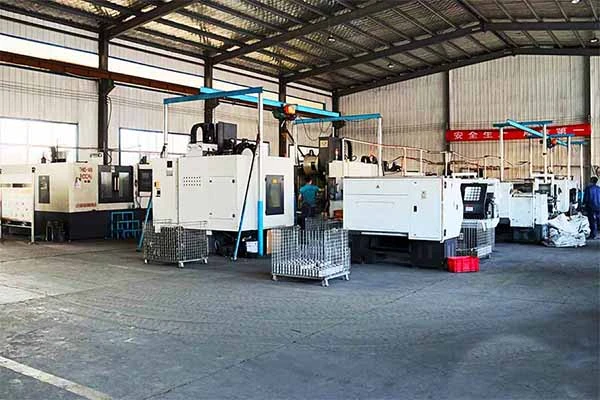
RMC operates integrated casting and machining workshops with modern production equipment and engineering software. This allows us to manufacture complex and high-precision metal parts with stable quality.
Strict Quality Control
Quality inspection is applied from raw materials to final machining. Chemical analysis, dimensional inspection, and process audits help ensure every batch meets customer specifications and traceability requirements.
Flexible OEM Manufacturing
We support custom production based on drawings, samples, or technical requirements. Our engineering team works closely with customers to improve manufacturability and reduce production costs.
One-Stop Production Service
From tooling and casting to machining, heat treatment, surface treatment, and logistics, RMC provides complete manufacturing support to simplify supply chain management for overseas buyers.


|
Type |
100*100~3000*8000mm or customize |
|
Precision |
1, 2, 3 Grade |
|
Hardness of working |
HB170-240 |
|
Working Temperature |
(20±5)℃ |
|
Weight |
1kgs-120kgs |
Exceptional dimensional accuracy
Lost foam casting stands out for its ability to produce parts with unparalleled dimensional accuracy. Unlike traditional casting methods that rely on filling molds, lost foam employs expanded polystyrene (EPS) foam patterns that expand to fill every detail of the mold.
Streamlined Manufacturing Process
One of the most significant advantages of lost foam casting is its ability to reduce the number of manufacturing steps. Traditional casting often requires multiple machining and assembly steps to achieve the desired finish and fit.
Integration of Assemblies
Lost foam casting enables the creation of complex parts as single, integrated units. This reduces the number of components needed in an assembly, which translates into fewer machining and assembly processes.
Compatibility with Multiple Metals
Another key advantage of lost foam casting is its versatility in working with various molten metals. The process can accommodate ductile iron, gray iron, aluminum, brass, and stainless steel, which are essential materials in manufacturing.
Lower Environmental Impact
Lost foam casting presents a more environmentally friendly alternative to traditional Sand Casting methods. The process requires lower energy consumption and generates less waste, making it a sustainable choice for manufacturers.
Variety of Densities
When it comes to lost foam patterns, versatility is key. These patterns are available in a range of densities, from 1.4 to 5.0 pounds per cubic foot (pcf), and can be tailored to meet specific weight requirements.

Automotive Industry
In the automotive industry, lost foam casting is used to produce engine blocks, cylinder heads, and other critical components. The process’s precision and ability to produce complex geometries make it ideal for automotive applications.
Aerospace Industry
Lost foam casting is also prominent in the aerospace sector, where it is used to create lightweight and high-strength components for aircraft engines and structural parts. The method’s accuracy and ability to produce parts with intricate details are highly valued.
Heavy Machinery
Heavy machinery manufacturers use lost foam casting to produce large and complex parts such as pump housings, valve bodies, and gearboxes. The process’s efficiency and cost-effectiveness are significant advantages in this industry.
Art and Sculpture
Artists and sculptors utilize lost foam casting to create detailed and intricate metal artworks. The ability to replicate fine details and the flexibility in design make it a preferred method for metal sculptures.
Steels and stainless steels
These alloys are popular for melting down and pouring into the mold because they're strong and very resistant to corrosion. Stainless steel is usually a touch more expensive than other metals, but its positive characteristics often make it worth the price.
Aluminum alloys
These are often pretty affordable materials when used for lost-foam casting. Because they’re lightweight, strong, and thermally conductive, manufacturers and hobbyists often look to different aluminum alloys.
Cast irons
Whether gray or ductile, cast iron is strong and resistant to wear, making it a good choice for this manufacturing method. This is especially true for more heavy-duty situations.
Nickel alloys
Thanks to how well they can handle heat and corrosive environments, nickel alloys are another go-to choice for lost-foam casting.
Sand
You’ll typically use dry sand to fill the container for lost-foam molding. Sometimes “green sand” is used, which is a mixture of bentonite clay and sand, giving it a soft, pliable, and slightly-damp feel.
|
Characteristic |
Lost Foam Casting |
Sand Casting |
Investment Casting |
Die Casting |
|
Mold/Tooling Cost |
Medium to High |
Very Low |
Medium to High |
Very High |
|
Production Volume |
Medium to High Batch |
Small to Medium Batch |
Small to Medium Batch |
Mass Production |
|
Part Size |
Medium to Large |
Very Wide (g to tons) |
Small |
Small to Medium |
|
Dimensional Accuracy |
High (CT6–8) |
Low (CT10–13) |
Very High (CT4–6) |
High (CT6–8) |
|
Surface Roughness |
Ra 3.2–12.5 μm |
Ra 12.5–25 μm |
Ra 1.6–3.2 μm |
Ra 1.6–6.3 μm |
|
Material Suitability |
Wide (Al, Fe, Steel, some Cu/Ni alloys) |
Very Wide (Most Alloys) |
Most Alloys |
Non-ferrous (Al, Zn, Mg) |
|
Min Wall Thickness |
≥ 2–3 mm |
≥ 3 mm |
≥ 0.8 mm |
≥ 2 mm |
|
Production Cycle (with tooling) |
Medium |
Relatively Short |
Long |
Very Short |
|
Complex Internal Cavities |
Excellent, no cores or parting line |
Capable, using cores |
Excellent, no parting line |
Limited |
Inquiry & Quotation
01
Confirming Details / Cost Reduction Proposals
02
Tooling Development
03
Trial Casting
04
Samples Approval
05
Trial Order
06
Mass Production
07
Continuous Order Proceeding
08
|
Packaging |
Bubble + Carton + Wooden Case |
|
Shipping |
We have long-term partnerships with DHL, UPS, FedEx, TNT, and EMS, and can arrange air or sea freight for large orders. |
RMC was founded in 1999 by our founding team based in Qingdao, Shangdong, China. With its foundry and machining workshop also in Shandong province, we have now grown to become one of the finest metal forming companies with processes of sand casting, lost wax casting (investment casting), shell mold casting, lost foam casting, vacuum casting, precision forging, machining and post-processes such as surface treatment and heat treatment.



(0/10)

