Qingdao Rinborn Machinery Co., Ltd.
+86 186 6184 7678


RMC Foundry is a China-based manufacturer specializing in precision metal casting and CNC machining for global OEM industries. Our capabilities include sand casting, investment casting, shell mold casting, lost foam casting, vacuum casting, machining, heat treatment, and surface finishing. We produce ferrous and non-ferrous metal parts used in industrial equipment, automotive, pumps, valves, agriculture, construction machinery, and energy applications.
Advanced Manufacturing Capabilities
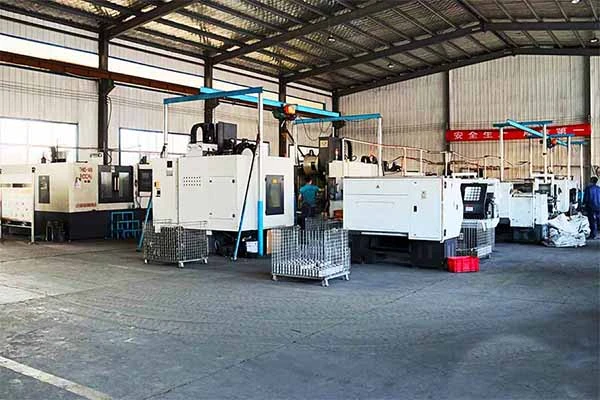
RMC operates integrated casting and machining workshops with modern production equipment and engineering software. This allows us to manufacture complex and high-precision metal parts with stable quality.
Strict Quality Control
Quality inspection is applied from raw materials to final machining. Chemical analysis, dimensional inspection, and process audits help ensure every batch meets customer specifications and traceability requirements.
Flexible OEM Manufacturing
We support custom production based on drawings, samples, or technical requirements. Our engineering team works closely with customers to improve manufacturability and reduce production costs.
One-Stop Production Service
From tooling and casting to machining, heat treatment, surface treatment, and logistics, RMC provides complete manufacturing support to simplify supply chain management for overseas buyers.


|
Material |
Aluminum Alloy, Zinc Alloy, Magnesium Alloy, Brass,Bronze, Copper, Stainless steel, Iron, etc. |
|
Size |
Customized |
|
Process |
Die casting, Sand casting, Investment casting,Lost foam casting etc. |
|
Heat Treatment |
Quenching and tempering by medium/high-temperature mesh-belt furnaces, solution treatment and aging by low-temperature mesh-belt furnaces |
|
Surface Treatment |
Powder coating, Polishing, Zinc plating, Silk printing, Laser engraving, Electroplating, Sandblasting, Spray painting etc. |
Pinpoint accuracy
High dimensional accuracy and surface finish is one of its benefits.
01
Diversity
Small as well as over-sized parts with complex geometrical shapes can be manufactured through this process.
02
Cost-effectiveness
The materials used in producing resin-bonded sand minimize wastage and production expenses creating an inexpensive choice for massive production.
03
Standardity
By using automated systems, the uniform quality is maintained in many batches during resin sand casting.
04
Eco-friendly
Less waste is produced during resin sand casting compared to other casting methods. This makes it possible to reclaim and reuse it more easily.
05
Automotive Industry
In automotive manufacturing, sand casting is widely used for producing critical components such as engine blocks, cylinder heads, crankshafts, and transmission housings.
Mechanical Engineering & Aerospace
The mechanical engineering sector relies on sand casting for producing machine tool bases, pump bodies, and valve housings, ensuring high strength and wear resistance for stable operation under heavy loads.
Energy & Infrastructure
In wind power generation, sand-cast hubs and bases are designed to endure wind loads for over 20 years. In hydroelectric power, turbine blades formed through sand casting improve hydrodynamic efficiency by over 15%.


Rail & Shipbuilding Industry
In the railway industry, sand-cast braking system components and wheels must pass 800 MPa strength tests, with their dense internal structure preventing fatigue cracks.
Agricultural Machinery & Art Industry
Tractor transmission housings and other agricultural components manufactured through sand casting reduce costs by 30% while maintaining high load capacity.
Extended Applications
In mining equipment, sand-cast crusher hammers made from high-chromium cast iron increase wear resistance threefold. The home appliance industry utilizes sand casting for components like washing machine counterweights, optimizing production cycles.
Pattern Creation
A pattern, typically made of wood, metal, or plastic, is crafted to replicate the final part’s shape, including gating systems.
Sand Mixing
Silica sand is mixed with a resin binder (e.g., furan resin) and a catalyst to initiate curing. Balasen uses automated mixing systems for consistency.
Mold Formation
The resin-sand mixture is packed around the pattern in a mold box and allowed to cure, forming a rigid mold.
Pattern Removal
The pattern is removed, leaving a cavity in the mold. Cores, if needed, are inserted for internal features.
Pouring and Cooling
Molten metal, such as carbon steel or alloy steel, is poured into the mold. After cooling, the mold is broken away to reveal the casting.
Finishing
The casting undergoes cleaning, shot blasting, and machining to meet specifications.
|
Material Grade |
Carbon Steel, Stainless Steel, Alloy Steel, Gray Iron, Ductile Iron |
|
Casting Size |
Up to 1,000 mm |
|
Part Weight |
0.5 kg – 100 kg |
|
Resin Sand Type |
Furan Resin Sand, Phenolic Resin Sand |
|
Surface Finish |
Sand Blasting, Painting, Powder Coating |
|
Machining Service |
CNC Turning, Milling, Drilling, Tapping |
|
Heat Treatment |
Annealing, Quenching, Tempering |
|
Tolerance Control |
Standard or Custom Requirement |
|
Packaging |
Bubble + Carton + Wooden Case |
|
Shipping |
We have long-term partnerships with DHL, UPS, FedEx, TNT, and EMS, and can arrange air or sea freight for large orders. |
RMC was founded in 1999 by our founding team based in Qingdao, Shangdong, China. With its foundry and machining workshop also in Shandong province, we have now grown to become one of the finest metal forming companies with processes of sand casting, lost wax casting (investment casting), shell mold casting, lost foam casting, vacuum casting, precision forging, machining and post-processes such as surface treatment and heat treatment.



(0/10)

