Qingdao Rinborn Machinery Co., Ltd.
+86 186 6184 7678


RMC Foundry is a China-based manufacturer specializing in precision metal casting and CNC machining for global OEM industries. Our capabilities include sand casting, investment casting, shell mold casting, lost foam casting, vacuum casting, machining, heat treatment, and surface finishing. We produce ferrous and non-ferrous metal parts used in industrial equipment, automotive, pumps, valves, agriculture, construction machinery, and energy applications.
Advanced Manufacturing Capabilities
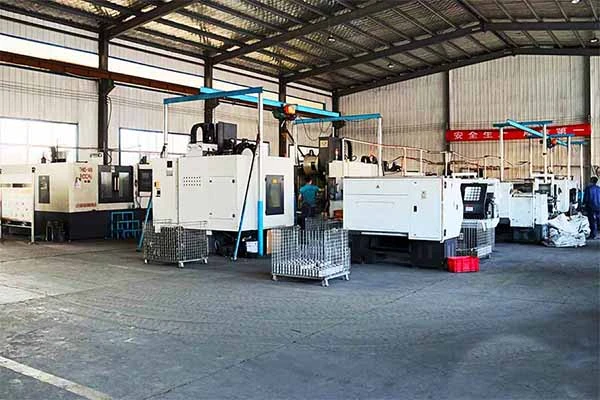
RMC operates integrated casting and machining workshops with modern production equipment and engineering software. This allows us to manufacture complex and high-precision metal parts with stable quality.
Strict Quality Control
Quality inspection is applied from raw materials to final machining. Chemical analysis, dimensional inspection, and process audits help ensure every batch meets customer specifications and traceability requirements.
Flexible OEM Manufacturing
We support custom production based on drawings, samples, or technical requirements. Our engineering team works closely with customers to improve manufacturability and reduce production costs.
One-Stop Production Service
From tooling and casting to machining, heat treatment, surface treatment, and logistics, RMC provides complete manufacturing support to simplify supply chain management for overseas buyers.


|
Casting Material |
Aluminium alloy ADC12 A380 A356 ZL101 102 104 |
|
Zinc alloy: ICE#1 #2 #3 |
|
|
Stainless steel: 303 304 316 |
|
|
Brass copper green tin copper |
|
|
Cast iron ball mill cast iron |
|
|
Polishing Tech |
Cast deburring machined surface treatment packaging |
|
Surface Treament |
According to requirement |
|
Tolerance |
+/-0.02MM or as required by the drawing |
High-Quality Finish
The low porosity of the resulting parts offers low degree of metallization when using gravity die casting. The ability to shape the mold in precise details allows the mold to produce clean and intricate parts which gives better appearance.
Cost-Effectiveness for Large Production Runs
This method of casting is relatively cheap especially when it comes to mass production of medium to large quantities. You remake using the same molds several times and hence saving more on the materials and cost of labor than in sand casting where you use disposable molds.
Superior Strength of Cast Components
Components manufactured using this process boast enhanced mechanical properties and resistance to wear and tear. The controlled cooling and solidification enhance the minimize porosity and increase in the structural density.

Automotive Parts
With gravity die casting, you get strong and lightweight car components such as engine blocks, cylinder heads, and transmission cases. This method provides high accuracy of the dimensions as well as high resilience due to high standards of automotive industry demands.
Industrial Machinery
You use gravity die casting in making parts for industrial machines, including pumps, gears, and valves. This method helps to provide durability, accuracy and reliability in case of components that are to be subjected to heavy usage.


Aerospace Components
You integrate gravity die casting for vital parts of aircrafts such as airframes, turbine shelters, and structural braces. The process offers impressive specific strength and indicates the attributes useful in high-reliability applications.
Consumer Goods
Gravity die casting enables you to establish high-quality and good-looking consumer products like chafing dishes and polished lamps and electronic casings.
Steel
Certain low-alloy steels with relatively lower melting points can be used for gravity die casting applications where specific mechanical properties are required.
Magnesium
Magnesium and magnesium-aluminum alloys are commonly used with gravity die casting due to their low density, very high strength-to-weight ratio, and excellent machinability.
Aluminum Alloys
At the industry as a whole, aluminum and its broad range of alloys are the most commonly exploited materials for gravity die casting due to their relatively low melting point, good fluidity when molten, relatively low cost, and favorable mechanical properties in the finished product.
Cast Irons
Cast iron is appreciated for its low raw material cost, toughness, and excellent wear resistance. It also offers good heat resistance and vibration-damping properties.
Copper Alloys
Copper alloys are widely used in gravity die casting, particularly for parts requiring good electrical conductivity or excellent thermal conductivity, such as bus bars, switch gear, and interconnect components in electrical systems.
Zinc
Zinc and zinc alloys, are widely used in gravity die casting due to their relatively low melting points, very low viscosity in the melt, and the naturally good surface finish they produce.
Step 1:
Initially, the mold is prepared and pre-heated made from “permanent” materials like metal.
Step 2:
The metal, melted to a precise temperature (between 700 °F and 2,500 °F), is then poured into the mold.
Step 3:
The force of gravity ensures the molten metal fills the mold cavity completely, capturing the intricate details and desired shape.
Step 4:
After cooling and solidification, the cast part is ejected from the mold, undergoing various post-processing techniques to meet the final specifications.
Inquiry & Quotation
01
Confirming Details / Cost Reduction Proposals
02
Tooling Development
03
Trial Casting
04
Samples Approval
05
Trial Order
06
Mass Production
07
Continuous Order Proceeding
08
|
Packaging |
Bubble + Carton + Wooden Case |
|
Shipping |
We have long-term partnerships with DHL, UPS, FedEx, TNT, and EMS, and can arrange air or sea freight for large orders. |
RMC was founded in 1999 by our founding team based in Qingdao, Shangdong, China. With its foundry and machining workshop also in Shandong province, we have now grown to become one of the finest metal forming companies with processes of sand casting, lost wax casting (investment casting), shell mold casting, lost foam casting, vacuum casting, precision forging, machining and post-processes such as surface treatment and heat treatment.



(0/10)

