Qingdao Rinborn Machinery Co., Ltd.
+86 186 6184 7678


RMC Foundry is a China-based manufacturer specializing in precision metal casting and CNC machining for global OEM industries. Our capabilities include sand casting, investment casting, shell mold casting, lost foam casting, vacuum casting, machining, heat treatment, and surface finishing. We produce ferrous and non-ferrous metal parts used in industrial equipment, automotive, pumps, valves, agriculture, construction machinery, and energy applications.
Advanced Manufacturing Capabilities
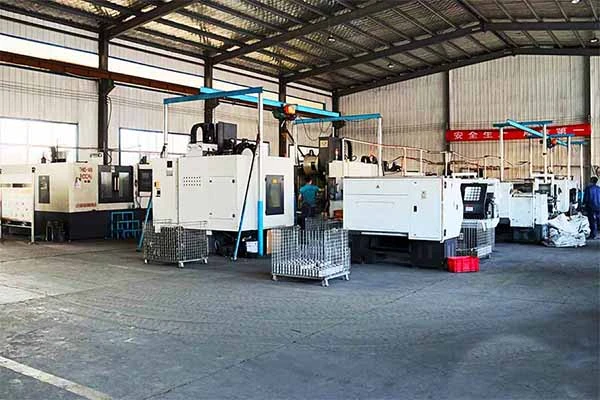
RMC operates integrated casting and machining workshops with modern production equipment and engineering software. This allows us to manufacture complex and high-precision metal parts with stable quality.
Strict Quality Control
Quality inspection is applied from raw materials to final machining. Chemical analysis, dimensional inspection, and process audits help ensure every batch meets customer specifications and traceability requirements.
Flexible OEM Manufacturing
We support custom production based on drawings, samples, or technical requirements. Our engineering team works closely with customers to improve manufacturability and reduce production costs.
One-Stop Production Service
From tooling and casting to machining, heat treatment, surface treatment, and logistics, RMC provides complete manufacturing support to simplify supply chain management for overseas buyers.


|
Quotation |
According to your drawing(size, material, thickness, processing content, and required technology, etc) |
|
Tolerance |
+/-0.01mm |
|
Materials Avaiable |
Aluminum, Stainless steel, Carbon Steel, Grey Iron, Steel, Brass, Bronze |
|
(Can be customized as customers' requirements) |
|
|
Surface Treatment |
Polishing, general/hard/color oxidation, surface chamfering, tempering, etc. |
|
Drawing Formats |
PRO/E, Auto CAD, Solid Works , UG, CAD / CAM / CAE, PDF |
Enhanced Strength and Durability
One of the most significant advantages of precision forgingss is their enhanced strength and durability. The forging process improves the mechanical properties of metals, resulting in components that can withstand extreme conditions.
Improved Material Utilization
Precision forgingss also optimize material utilization. The process generates parts with minimal waste compared to traditional methods, such as machining. By shaping the metal directly into the desired form, manufacturers can conserve raw materials, thereby reducing costs and environmental impact.
Cost Efficiency and Reduced Waste
In addition to their material efficiency, precision forgingss often lead to lower overall production costs. The reduced need for secondary machining processes translates to lower labor costs and shorter lead times.
Versatility in Applications
The versatility of precision forgingss allows them to be used across various industries. From aerospace components and automotive parts to machinery and energy applications, these forgings are tailored to meet specific performance requirements.
Aerospace Industry
Precision forging plays a crucial role in the aerospace sector, where safety and reliability are paramount.
Automotive Industry
Precision forging is extensively used in the automotive sector for producing critical components like connecting rods, crankshafts, gears, and steering knuckles.
Defense Industry
The defense sector relies on precision-forged components for various applications, including military vehicles, artillery, and firearms.
Medical Equipment
Precision forging finds applications in the manufacturing of medical equipment, particularly for orthopedic implants and surgical instruments.
Power Generation
Components used in power generation equipment, such as gas and steam turbines, often undergo precision forging.
Oil and Gas Industry
Precision-forged components are vital for the oil and gas industry, particularly in exploration, drilling, and extraction operations.

|
Comparison Aspect |
Precision Forging |
Closed Die Forging |
|
Forming Focus |
Near-net-shape control |
Shape formation |
|
Dimensional Accuracy |
Higher |
Moderate |
|
Machining Allowance |
Reduced |
Larger |
|
Process Stability |
High repeatability |
Depends on machining |
|
Material Efficiency |
Higher |
Moderate |
|
Typical Use |
Tight-tolerance OEM parts |
General forged parts |
|
Material Grade |
Category |
Key Advantage |
Common Application |
|
ASTM A105 |
Carbon Steel |
Cost-effective, Weldable |
Flanges, Pipe Fittings |
|
AISI 1045 |
Carbon Steel |
Balanced Strength/Ductility |
Axles, Forged Shafts |
|
AISI 4140 |
Alloy Steel |
High Fatigue Strength |
Gears, Crankshafts |
|
SS 316L |
Stainless Steel |
Corrosion Resistance |
Marine Pumps, Valves |

|
Packaging |
Bubble + Carton + Wooden Case |
|
Shipping |
We have long-term partnerships with DHL, UPS, FedEx, TNT, and EMS, and can arrange air or sea freight for large orders. |
RMC was founded in 1999 by our founding team based in Qingdao, Shangdong, China. With its foundry and machining workshop also in Shandong province, we have now grown to become one of the finest metal forming companies with processes of sand casting, lost wax casting (investment casting), shell mold casting, lost foam casting, vacuum casting, precision forging, machining and post-processes such as surface treatment and heat treatment.



(0/10)

